
Scroll to see how amazing it was 










S. T
Data Scientist
MOD
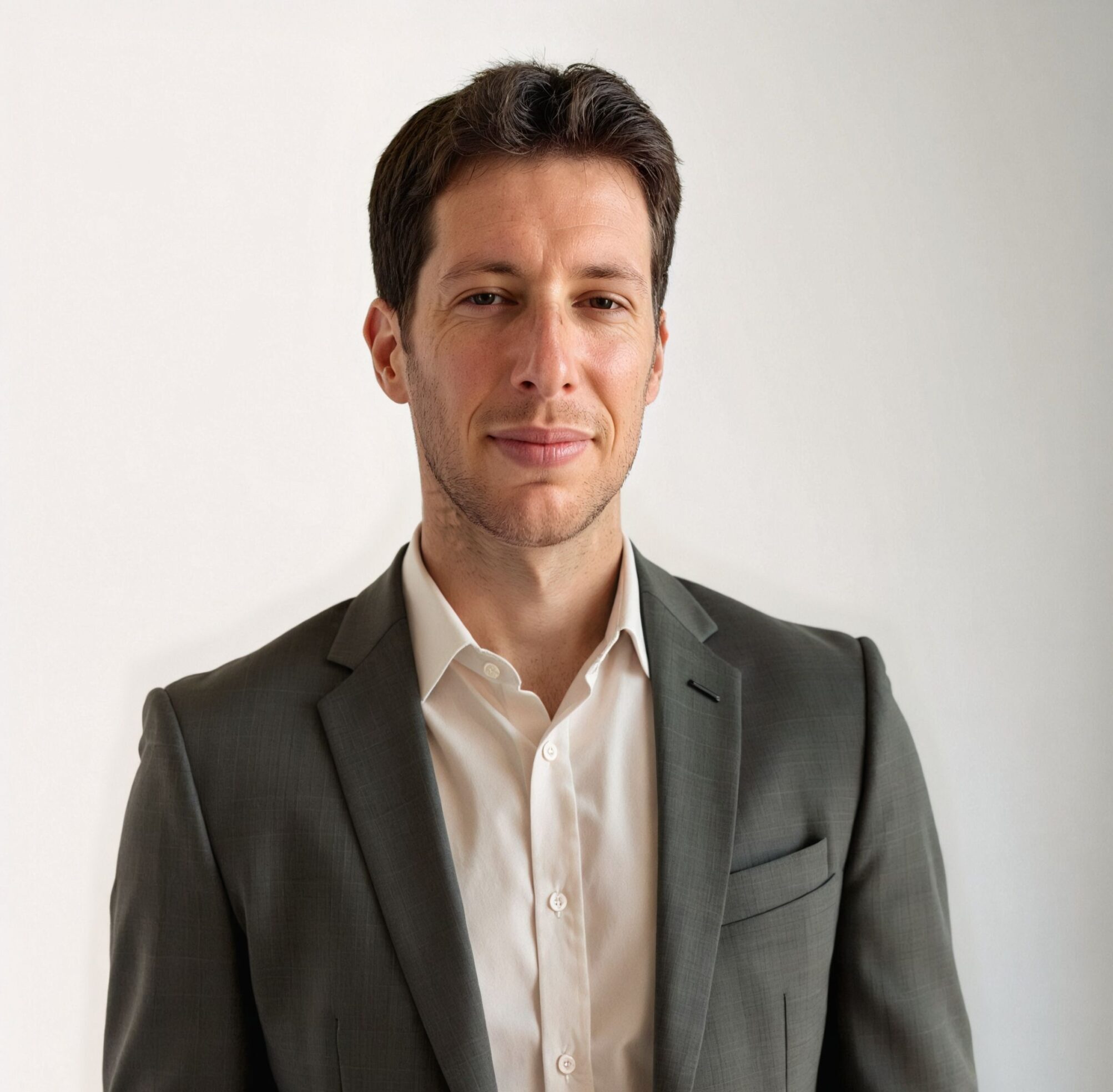
Tal Fialkow
VP AI Cyber
Dream

Moran Baruch, PhD
AI and Security Research Team Lead
IBM Research
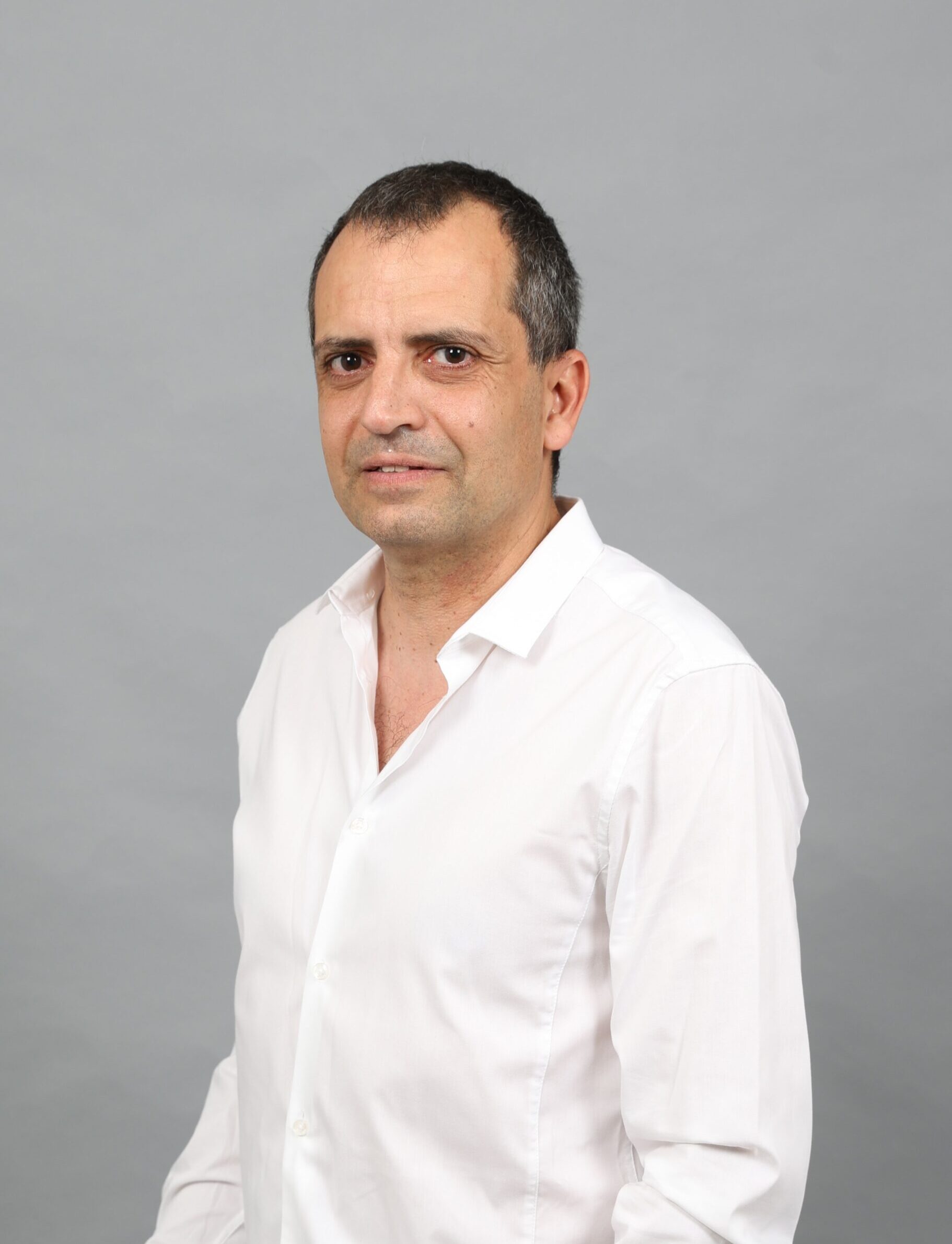
Natan Levy, PhD
System Engineer methodology leader
IAI

Gabi Dabach
Executive Architect, Defense Sector
Oracle
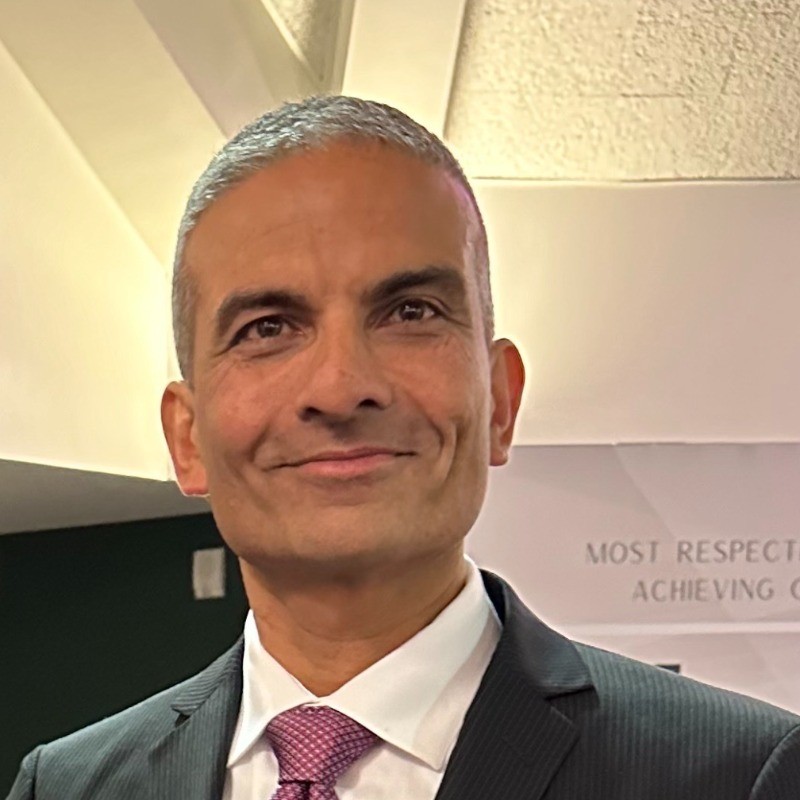
Ashok Sudarsanam, PhD
Associate Vice President, MLA Software
SiMa.ai
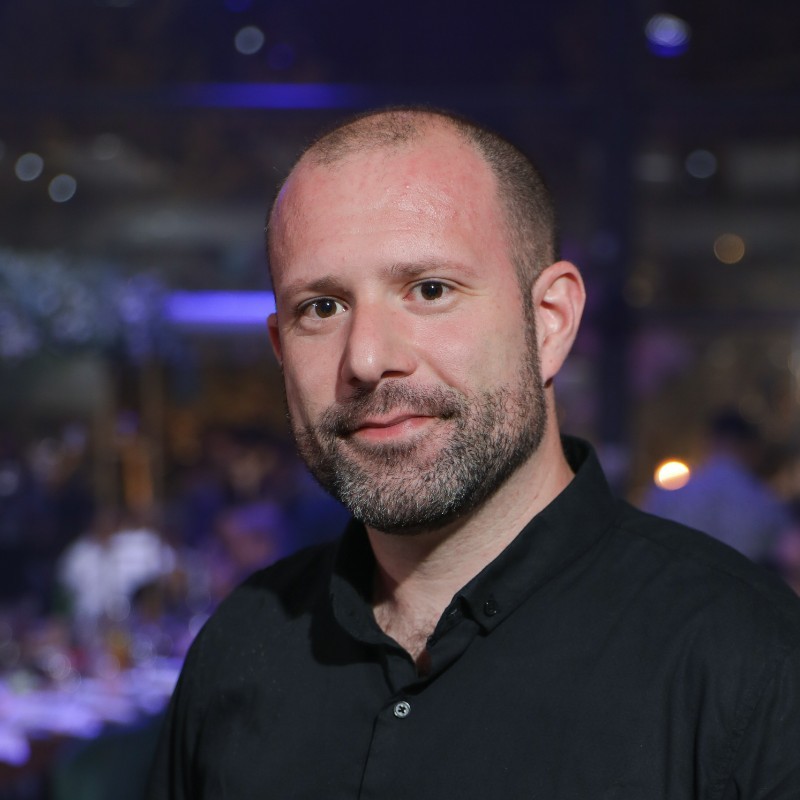
Ariel Polak
Product Manager
MOD
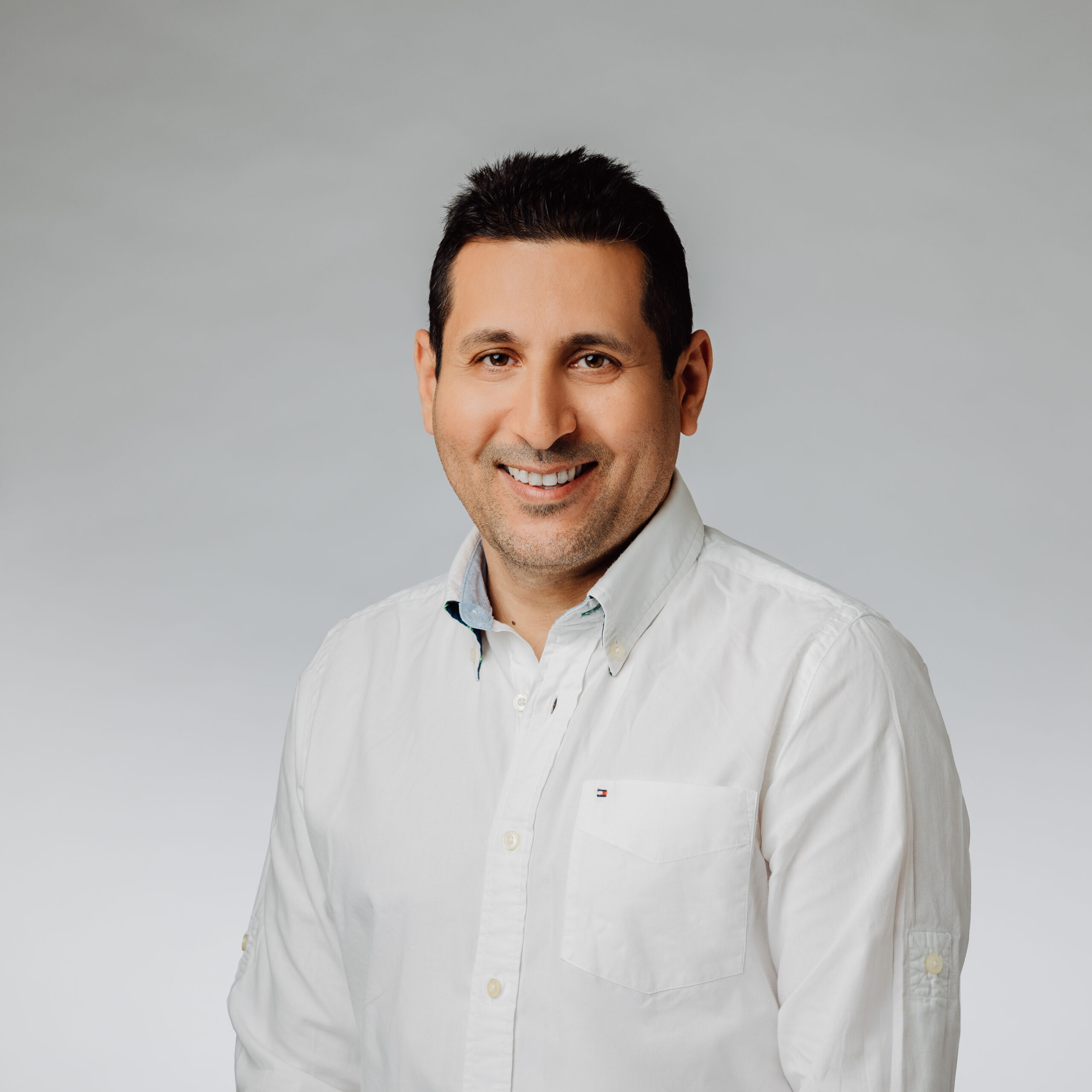
Ofir Zamir
Senior Director of AI Solution Architecture
NVIDIA

Bar Lanyado
Security Research Lead
Lasso Security

Uri Eliabayev
Founder
MDLI

Dr. Danny Bickson
CEO & Co-Founder
Visual-Layer

Idan Barak
VP Product
Webiks

Boris Dahav
Data, Analytics & AI Domain Specialist
IMOD Division, Oracle
8:30-9:30
Registration & Light Breakfast
9:00-9:35
Opening Remarks
Uri Eliabayev
Founder at MDLI
9:35-9:55 | Hebrew
LLMs That Think Like Attackers: Modeling and Projecting APT Attacks onto Organizational Context
Advanced Persistent Threats (APTs) operate through sequences of subtle, strategic actions that unfold over time. To defend against them, organizations must think like attackers. This talk introduces a novel approach: using Large Language Models trained to model attacker behavior as sequences of atomic actions expressed in natural language. These models don’t just simulate attacks, they understand and deconstruct them.
We demonstrate how these LLMs can project attacker actions onto the live organizational context, aligning modeled behavior with real-time system configurations, logs, and network structures. By bridging the gap between theoretical attack chains and actual enterprise environments, we unlock a new capability: automated mapping of potential threats, tailored to each organization’s unique digital footprint.
Tal Fialkow
VP AI Cyber at Dream
10:00-10:20| Hebrew
Unlocking the Power of Disconnected Cloud with Next-Generation AI
Disconnected cloud solutions provide unique advantages over traditional approaches, enabling organizations to meet strict requirements without compromising agility. In this session, we will show how integrating advanced AI and data processing capabilities unlocks smarter decision-making and operational efficiency.
Gabi Dabach
Executive Architect, Defense Sector at Oracle
Boris Dahav
Data, Analytics & AI Domain Specialist at IMOD Division, Oracle
10:25-10:45| English
MLSoC Modalix™ by SiMa.ai: Redefining Physical AI with GenAI-Ready Performance
The AI landscape is undergoing a huge shift, and we have now entered the era of Physical AI. A defining characteristic of Physical AI is that instead of just doing things, machines are now able to reason about things. Multimodal Large Language Models are a cornerstone of Physical AI. LLMs enable machines to interact with the physical world and make real-time decisions.
Effective Physical AI solutions require state-of-the-art silicon and software. The silicon must be able to execute LLMs with both high performance and low power consumption, and the software must be able to support the ever-changing landscape of LLMs. In this presentation, I will discuss how SiMa’s state-of-the-art silicon and software stack are ideally suited for Physical AI applications.
Ashok Sudarsanam, PhD
Associate Vice President, MLA Software at SiMa.ai
10:50-11:10| Hebrew
MAFAT Challenge – Lessons Learned from Running 6 Data Science Competitions
Data science can become a highly competitive field, especially when applied to defense challenges. Since 2018, we have developed, executed, and managed the MAFAT Challenge, a series of data science competitions addressing real-world problems in domains such as radar signal processing, computer vision, and natural language processing. More than 3,000 participants have taken part in 6 competitions, with total prizes exceeding $250K.
In this talk, we will share the main lessons learned from managing these challenges—highlighting what architectures and methodologies worked, what didn’t, and how these insights can inform the design of future solutions.
Idan Barak
VP Product at Webiks
11:10-11:40
Coffee Break
11:45-12:05| Hebrew
AI Behind the Shield: Homomorphic Encryption for Defense applications
Advances in AI are unlocking powerful capabilities for defense applications, but the sensitive nature of the data powering these models raises significant concerns regarding security and privacy. Homomorphic Encryption (HE) offers a promising solution by enabling computation directly on encrypted data, ensuring information remains protected throughout processing. In this talk, we will introduce the fundamentals of HE and its role in enabling secure AI processing, highlight the unique challenges of adapting transformer-based deep learning models to operate efficiently under HE, and present recent innovations addressing these obstacles. We will illustrate the potential through a defense-relevant scenario: encrypted suspect detection in surveillance footage, where the system can identify persons of interest without ever revealing the underlying images. This approach could pave the way for secure, privacy-preserving AI in future defense systems.
Moran Baruch, PhD
AI and Security Research Team Lead at IBM Research
12:10-12:30| Hebrew
Surfacing the Wild Side of Social Video with Visual Layer
As AI revolutionizes how we write, code, and communicate, visual data remains the final frontier. Every day, billions of images and videos are generated, but lack the tools to search, analyze, and act on them efficiently. Visual Layer is building the default AI-native environment for visual data, combining multimodal understanding, natural language prompts, and agent-based automation into a unified platform. In this session, we’ll share our vision, show real-world examples of rare events found in millions of social videos, and discuss why the shift to multimodal-native workflows is happening now.
Dr. Danny Bickson
CEO & Co-Founder at Visual-Layer
12:35-12:55| Hebrew
Building AI Factories and Deploying AI Agents at Scale
AI has become infrastructure. And like the internet or electricity, this infrastructure depends on factories. Today, these “factories” are the systems we build to power AI agents and physical AI. Ofir Zamir, Senior Director of AI Architecture at NVIDIA Israel, will showcase the latest technologies that enable developers to build, optimize, and scale AI agents, covering the full lifecycle from onboarding to fine-tuning to test-time scaling.
Ofir Zamir
Senior Director of AI Solution Architecture at NVIDIA
13:00-13:20| Hebrew
Would you trust AI to fly you safely home?
Deep Neural Networks (DNNs) are revolutionizing defense and aerospace systems, offering unprecedented capabilities in autonomous navigation, target recognition, and mission planning. However, a critical vulnerability threatens their deployment in safety-critical applications: DNNs can be fooled by imperceptible input modifications, causing catastrophic misclassifications. For example, adding carefully crafted noise invisible to human eyes can cause an aircraft recognition system to mistake a military jet for a civilian plane—a failure that could have devastating consequences.
Current certification standards, developed for traditional software, cannot address this unique challenge of neural networks. In aerospace environments where a single wrong decision can compromise missions or endanger lives, we need new approaches to ensure AI reliability.
This presentation introduces DEM (DNN Enable Monitor), a groundbreaking runtime verification system that analyzes input trustworthiness in real time, delivering reliability assessments in under one second. DEM focuses on individual predictions rather than attempting to certify entire networks. When the system makes a prediction, DEM rapidly tests how stable that prediction remains under slight perturbations. Stable predictions are automatically certified as reliable, while unstable ones are flagged for immediate human expert review.
This real-time capability makes DEM uniquely suited for operational defense environments where split-second decisions are critical. Our evaluation demonstrated exceptional performance, with over 90% success in identifying unreliable predictions across multiple scenarios. DEM operates without access to AI systems' internal workings, making it universally applicable across all defense platforms.
DEM enables the safe deployment of AI in mission-critical applications by providing mathematical guarantees about prediction reliability within operational timeframes. This breakthrough positions Israel as a leader in trustworthy AI for national security, bridging the gap between cutting-edge AI capabilities and the safety requirements of defense systems.
Natan Levy, PhD
System Engineer methodology leader at IAI
13:20-14:20| Hebrew
Lunch & Mingling
14:25-14:45| Hebrew
MLOps in an Air-Gapped World
Building an MLOps platform for top-secret data and diverse client needs means balancing security with flexibility.
It must operate in air-gapped, classified environments with zero external dependencies.
At the same time, it must support varied workflows, tools, and data types, from deep learning to real-time inference.
The platform must be modular, self-service, and adaptable to every project's unique requirements.
This dual challenge demands a secure, composable, and resource-aware MLOps foundation built for mission-critical AI.
Ariel Polak
Product Manager at MOD
14:50-15:10| Hebrew
IdentityMesh: Exploiting Lateral Movement in Agentic Systems
Imagine you are asking your agent to handle a simple request you received through a bug report, and unknowingly opening doors across your company's entire digital infrastructure.
This unsettling scenario is no longer hypothetical, it is the reality revealed by our recent research into the rapid growth of agentic AI platforms, such as multi-agent control frameworks (MCPs) and AI-powered browsers.
Meet IdentityMesh, a critical vulnerability in these advanced AI systems. At its core, IdentityMesh collapses the boundaries between multiple distinct user identities, merging them into a single "operational entity." The result? A seemingly innocent action in one area, where a single click can unleash unauthorized activities across completely unrelated systems. Alarmingly, in one real-world scenario, an attacker’s crafted message submitted via a benign “Contact Us” form triggered hidden actions in Slack, GitHub, email platforms, and more, completely without user intent or detection.
IdentityMesh isn’t confined to open or external environments; even closed, supposedly secure internal networks are vulnerable. In these trusted environments, agentic systems can silently bridge segregated domains, enabling stealthy lateral movement that evades conventional security measures. The repercussions are severe: unauthorized access, untraceable malware propagation, and covert manipulation of internal workflows become not just possible, but trivial.
This session will unravel the story of IdentityMesh, exploring how a subtle flaw in AI architecture can transform ordinary users into unwitting agents of malicious intent.
Bar Lanyado
Security Research Lead at Lasso Security
15:15-15:35| Hebrew
Cyber forensics in scale using ai
Detecting malicious behavior in forensic text artifacts is a challenging task, particularly when dealing with long or noisy datasets. In this talk, we present our methods for leveraging Large Language Models (LLMs) to parse and analyze forensic text artifacts. We discuss our approach to model selection, evaluation strategies, and the challenges of tokenization, highlighting how we address these issues to advance forensic analysis of malicious activity.
S. T
Data Scientist at MOD
15:40
Closing Remarks
Uri Eliabayev
Founder at MDLI
